Retaining wall surfaces function gently till they do not. When stress creates responsible for a wall, the signs rarely show up out of no place. You observe hairline gaps stretch all over the face, weep gaps run a lot longer after hurricanes, or even the best of the wall inclines just sufficient to stand out. Helical tieback anchors are among one of the most trusted means to gain back capacity and stop action without restoring the entire framework. Installed accurately, they deliver quantifiable resistance as well as urgent load transfer. Put up badly, they add little value as well as often make conditions worse.
This manual distills ideal practices from the area. It covers what concerns on layout, piercing angles, torque relationship, cement, hot-dip priming, bracketry, screening, and also information. It also frames when helical tiebacks are actually the appropriate resource and also when micropiles, protection stacks, or various other procedures better accommodate the complication. The circumstance favors commercial foundation stabilization and deep foundation repair where bunches as well as obligations are actually greater, yet the concepts put on municipal as well as hefty civil job as well.
Where helical tieback anchors create sense
Helical tieback anchors succeed when the maintained ground comes from the main face of the wall as well as you can easily bore entries on a regulated grid. They match soldier stack walls, sheet pile wall surfaces, cast-in-place concrete walls, as well as particular brickwork wall surfaces that have enough honesty to take loads through a grain or even faceplate. Common embedment lengths range coming from 15 to forty five feets relying on soil conditions and target abilities. In medium dense sands and strong clay-baseds, a helical tieback can deliver workload of twenty to 80 kips along with foreseeable functionality, confirmed by installation torque and also evidence testing.
They are actually certainly not a cure-all. If the wall surface is actually severely displaced or even the backfill is saturated and inadequately drained, tieback anchors will definitely fight a losing struggle versus hydrostatic pressure. In expansive clay-based areas along with periodic wetness swings, you may still need drain renovations, an alleviation effectively, or even controlled backfill. In historic masonry along with friable mortar junctions, anchorage usually requires circulated walers and also careful tons discussing to steer clear of local crushing.
In short, helical tiebacks restrict action through engaging experienced dirt beyond the energetic block. They are very most successful when coupled with drain, proper wall surface experiencing, and also a helpful load pathway from support head to design. On highly packed web sites or where get access to is restricted, micropiles or bored protection heaps might lead, specifically for vertical load paths and underpinning rather than side restraint.
The ground investigation that saves frustrations later
Everything great regarding commercial helical tieback anchor installation begins along with the soil profile page. A fast borings prepare that misses out on a slim layer of loose filler or organics may sink ability prophecies. I wish at the very least two borings along each one hundred feets of wall, offset a little so our company are not blind to irregularity. If the wall runs across a reduce with blended filler, include borings. If groundwater varies seasonally, pull famous information or established brief piezometers.
Pay focus to:
- Stratigraphy constancy and density of experienced coatings about awaited helix elevations. Shear strength specifications. For granular dirts, SPT N-values and also relative density; for cohesive soils, undrained shear strength coming from lab screening or wallet penetrometer adjusted to the site. Groundwater depth as well as periodic variety, whether artesian conditions exist, as well as the possibility for piping. Fill versus native. Outdated metropolitan satisfies can keep block, timber, and also gaps. They are fine for the wall face, certainly not excellent for support bearing.
A great geotechnical record need to supply support capacity relationships. Otherwise, utilize maker torque-to-capacity connections as a beginning factor, then verify along with evidence screening. Conventional concept at first set up is actually seldom regretted.
Helix arrangement, steel collection, and corrosion
The coil top is business end of a helical tieback. Opt for layer sizes to match dirt density and target capacities, typically stacking two to 4 layers on the top. An usual arrangement for combined dirts could be 10-12-14 in coils spaced 3 times their size. Always keep plates far good enough apart to avoid dirt disorder overlap. For long tiebacks with several plates, that space issues much more than individuals think, especially in gentle clays where remolding reduces stamina around closely spaced plates.
Shaft choice depends upon both ability and installment torque. Sound straight shafts infiltrate properly via blockages and also dense grounds and give sturdy torque transfer. Sphere void sections offer far better bending stiffness as well as deterioration allotment for lasting company. A lot of industrial jobs utilize 1.5 to 1.75 inch square shafts or even 2.875 to 3.5 in around shafts. Know your setup tools's twist restriction and match it to Commercial Helical Pile Installation the shaft and target load so you are certainly not slowing rigs or even under-driving anchors.
Corrosion is actually certainly not an extra topic. For long life span, point out hot-dip priming or even a combined unit of priming plus sacrificial thickness. In threatening soils along with low resistivity or even roaming currents, think about epoxy coverings or, in uncommon high-risk cases, micro pile installation techniques cathodic security. Document soil resistivity screening; guesses at corrosivity are bad method for 50-year walls.
Access, setting up, and exactly how real web sites transform plans
Designs check out clean theoretically. In the field, guardrails, energies, traffic light, and also surrounding home lines make complex every thing. Beginning with a setting up plan that responds to: where the gear will certainly station, where twist surveillance tools as well as hydraulic electrical power kits will rest, how spoils will certainly be actually consisted of, and also exactly how clutter and exploration liquids are going to be actually removed mundane options. On metropolitan pavements, even a tiny spill brings about complaints. Prepare containment tarpaulins as well as vac any type of slurries immediately.
If the wall structure lacks a crystal clear face due to landscaping or even veneer rock, program careful demolition. Retain the subdrain's functionality in the course of work. Gather core examples on the surface to confirm wall surface density and reinforcement. Rebar locators aid stay away from traversing bars during the course of coring, yet old walls do not constantly match as-builts. I as if to confirm a minimum of two admittance places before committing the staff schedule.
Entry angle and also support geometry
Helical tieback anchors for retaining wall structures normally put in at battered slants of 10 to 20 levels listed below straight to strike the passive area without going down right into much deeper unstable layers. The goal is to start at the wall skin, go through the energetic block, and bear in seasoned component past the academic breakdown extension. In rough backfill behind soldier pile lagging, a somewhat steeper angle may assist get around disturbed areas and any powers. Nonetheless, steeper angles boost the upright part of the support pressure, which could possibly raise the wall otherwise appropriately dispersed by a wale.
Keep the access altitude high sufficient to intersect your wale or faceplate conveniently. On tall wall surfaces, look at two or even more altitude rows to disperse bunch and limitation bending over in the wall face. If the wall surface is actually adaptable, an upper row frequently supports rotation much better than adding extra supports to a singular reduced row.
Pre-drilling as well as obstruction handling
Working in outdated urban fill promises obstructions. Wood, block, as well as occasional cement pieces appear without warning. The most ideal teams hold a small-diameter captain auger and also a center gun barrel for the face. Pre-drilling an aviator opening through the skin and also the 1st couple of feet of backfill helps steer the anchor as well as lowers spalling. If you struck a refusal prior to reaching concept intensity, do certainly not oblige it. Wiggle out, switch flat or a little change angle, as well as make an effort again. Record the obstruction as well as carry on. A couple of relocations per 100 shoes of wall structure is common. More than that, as well as you might need to have an alternate unit like a punched micropile anchor.
Pre-drilling via cobbles as well as dense gravel could be a double-edged saber. It eases installation yet may reduce arrest and ground ability if overused. Always keep pre-drill sizes as tiny as practical and merely with the challenging area, not across foreseed coil bearing layers.
Torque tracking as well as capability correlation
Torque is the heartbeat of helical installment. Industry teams need to check out a calibrated torque indication linked to the disk mind. A lot of producers post torque-to-capacity proportions, usually in the variety of 8 to 12 foot-pounds every kip for square shaft devices and somewhat different for round shafts. Neighborhood dirts change those varieties. Address published worths as direction, then verification exam sufficient anchors to improve the project-specific correlation.
I like to establish a minimal embedment size and also a minimum firing torque. Not either-or. Terminating only on twist can easily leave a quick anchor along with dangers of tons dropping as dirts slip. Terminating only on depth can easily leave behind an underperforming support in soft layers. Demand both. And if the twist increases suddenly, time out to find if you hit a separated thick lense. If twist drops constantly over a number of feet, you are actually very likely in a weaker layer. Change the concept on the fly with engineer commendation rather than hopeful thinking.
Grouting, encapsulation, and also groundwater
Not every helical tieback is actually grouted. In lots of rough grounds, ungrouted helical anchors perform properly and also steer clear of mess. In soft clay-baseds or strongly disturbed fills, cement can easily stabilize the annulus and rise stiffness near the wall surface face. Make use of a regulated reduced hemorrhage mix. If groundwater is energetic, pressure cement coming from the bottom up using tremie strategies to stay away from voids. I favor to grout only the top part near the face where bunch transactions right into the wall benefits from boosted stiffness, unless the design exclusively requires whole encapsulation to enhance deterioration protection as well as capacity.
If the website possesses moving groundwater, established a sump and pump to maintain the work zone completely dry. Wet faces complicate epoxy or sealant connecting at the plate. Quick-setting nonshrink grout assists chair the bearing layer tight to the wall also in moist conditions.
Waler units, faceplates, and bunch transfer
A helical tieback is actually only just as good as its own relationship to the wall structure. For soldier stack along with lumber or concrete lagging, a constant steel grain distributes anchor lots as well as maintains the lagging coming from crushing in your area. For cast-in-place or stone concrete, a steel bearing platter occasionally suffices, however also then I like to prolong a short grain to record surrounding supports and also limit punching danger. Brickwork wall structures usually require a spreader platter with anchors spaced closer to maintain compressive tensions below allowable market values. On famous block, compressive capacity can be remarkably reduced. Field testing with a flat jack gives actual amounts and also prevents surprises.
Anchor minds ought to come for future inspection. Welds and screws need to have to become protected, typically through galvanizing and afterwards a strong coating after setup. If the wall structure is going to be actually laid to rest once more, cover the head in a defensive membrane before backfilling.
Proof screening and also functionality verification
Proof screening is actually not a rule. It is actually the only method to convert torque connection as well as summations into confirmed capability. Regular process require filling each examination anchor incrementally to 1.25 to 1.5 times the concept tons as well as securing at each step, watching creep over a specified duration. Acceptance may confine total movement at the greatest test tons and also creep during the final hold to tight limits, for example less than 0.04 inches in 10 moments, depending upon the governing standard.
Test enough supports to catch variability. On a 200 foot wall surface along with even dirts, evaluating the initial pair of supports in each row as well as 5 to 10 per-cent thereafter is common. In variable filler or even if twist analyses present large scatter, increase the rate. Documentation whatever: torque at each feet of embedment, last torque, lots at each action, displacement readings, and also keep opportunities. A tidy testing record soothes conflicts months later.
Drainage and also easing pressure responsible for the wall
Even the most effective support may not out-muscle water. If the wall structure does not have practical drain, add it. Unobstructed or replace clogged weep gaps. Put in a perforated subdrain covered in filter cloth at the base and daylight it to a proper outlet. Use free-draining backfill for any switched out segments. On commercial foundation repair tasks where the wall abuts a property, connection site grading and also roofing system drainage in to the concept to maintain runoff out of the wall structure. Hydrostatic alleviation takes an unexpected amount of lots off tiebacks during the course of tornado cycles.
Safety, powers, and also permissions
Every commercial helical tieback anchor installation sits inside a web of licenses, utility scores, and also sometimes adjacent home easements. Consult power locates early, then confirm with ground passing through radar when courses pass near essential lines. I have actually observed gas solution series operate diagonally across backfill when they were actually supposed to be right. That surprise wrecks a day. If supports should expand under a bordering tract, safeguard a lawful tieback easement and also document it. Future digging by other people can wreck anchors otherwise.
On web site, specified firm techniques for lockout of equipment, overhead protection near active streets, and appropriate bandaging of the skin while coring. Maintaining wall structures that are presently relocating can switch suddenly when passed through, particularly if filled. Make use of short-term bracing if the building designer suggests it.
Coordination with various other deep-seated groundwork methods
Helical tiebacks live in the exact same tool kit as micropiles, helical piles, as well as resistance stacks. Each system solves a various issue:
- Micropiles and micropile installation deal with high axial bunches in limited access locations as well as operate effectively for underpinning when bunch has to transfer to much deeper strata. They are punched, bolstered, and grouted, with expected functionality in cobbles as well as boulders where coils struggle. Helical heaps are actually superb for compression and stress loads on brand-new or even retrofit groundworks, particularly where resonance needs to be minimal. commercial helical pile installation may be faster than bored bodies in even soils. Resistance piles drive by hydraulic hoisting versus the property. commercial resistance pile installation helps when vibration should be actually restricted and also overhead get access to is constricted, though they count on obtaining a specified under the existing structure. Tieback supports, particularly helical tieback anchors, manage side bunches on maintaining devices. commercial helical tieback anchor installation makes sense when wall skins are accessible and soils make it possible for torque-driven embedment.
On jobs along with each lateral as well as upright requirements, we commonly combine bodies. For instance, our experts stabilize a bending wall surface along with tiebacks at that point found the footing along with micropiles to cease negotiation. For structural foundation repair on much older structures with mixed problems, split remedies are actually usual. Decide on the easiest device that fulfills the tons, dirt, as well as accessibility constraints.
Practical sequencing that keeps teams productive
Nothing tugs a task like waiting on parts or screening devices. Phase products therefore leads and expansions for traditional depths get on hand, as well as keep at minimum one alternating coil arrangement ready for tougher coatings. Affirm torque monitoring gear is adjusted prior to mobilization. If a welder is actually required for waler relationships, book all of them to adhere to anchor installment closely so the wall surface carries out not sit along with short-term supporting longer than necessary.
A regular series for a 12 to 16 foot high wall surface operates such as this. Observed cut and center the face at anchor areas. Put in the 1st 2 supports as exams, evidence bunch them, and also call the termination torque or embedment if needed. Wage the row, setting up supports on a working rhythm of layout, drill, drive, cut to duration, and prepared crowns freely. Observe along with waler installment and also last torque-to-load seating at crowns, then grout or seal off the skin. If a 2nd row is actually required, replay at the upper altitude. Wrap with drain renovations and also surface area restoration.
Field details on common mistakes
Most support problems outline back to a couple of preventable bad moves. Over-reliance on torque without deepness management generates supports that look good on a gauge yet being in flimsy dirt. Disregarding drain produces powers that slip past forecasts. Taking too lightly the wall's capacity to distribute weights results in local area squashing under small platters. Hurrying verification tests or even bypassing them due to schedule tension invites rework. Skimping on oxidation defense appears years later on when other people obtains phoned call to fix your job.
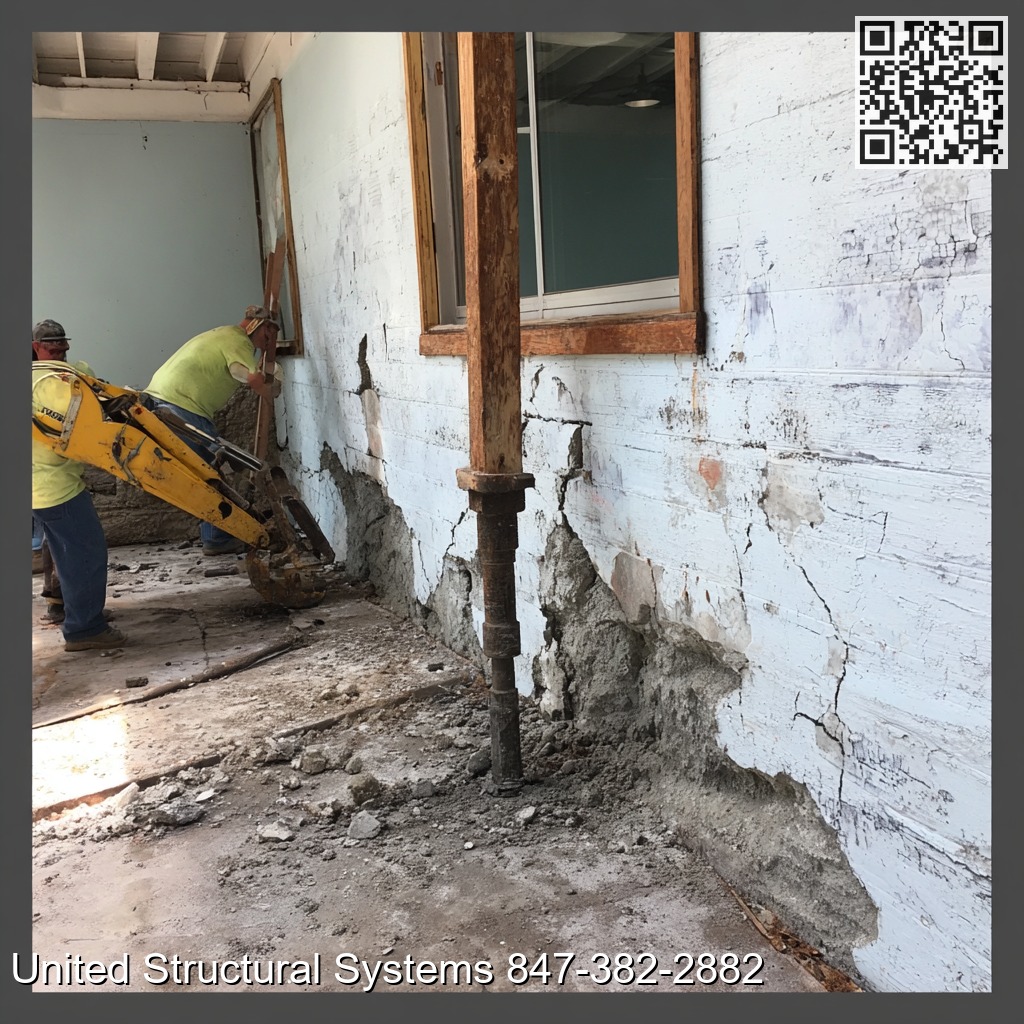
I once viewed a crew fight to hit a higher torque in a clay-based lense merely 12 feets back, then stop there certainly given that the varieties looked sturdy. Verification screening showed substantial creep. The engineer called for much deeper embedment right into an even more regular coating at twenty feets, twists fell slightly, and also the proof examination passed along with a fraction of the motion. The clock shed a day, but the owner got supports that will last.
Documentation and turnover that stand up to scrutiny
Commercial structure stablizing typically finishes along with a file that lives longer than any of us. Include the monotonous logs, installment logs with torque every foot, final torque, embedment, angle, and place as-built collaborates. Add evidence examination contours and recognition criteria, photos of support scalps as well as waler information, oxidation defense specs and also receipts for hot-dip priming, and also any type of modifications authorized in the course of the work. If the project included associated work like foundation crack repair on surrounding frameworks, link those documents so the manager has a comprehensive photo of the internet site's architectural foundation repair.
This amount of documentation silences insurance claims. It also aids the upcoming developer who acquires the internet site comprehend what was actually carried out, where, and why.
Cost, organizing, and realistic expectations
Owners ask for predetermined costs and also precarious routines. You may offer both with allowances for blockages and also a crystal clear system cost for expansions past the design depth. On straightforward grounds with excellent get access to, crews can mount 8 to 15 supports daily depending on size and also examination criteria. Along with heavy testing or hard access, cut those varieties. Grouting near the face incorporates opportunity. Urban work constantly sets up slower than available websites as a result of holding, sound windows, and also mundane management.
Cost every support differs widely along with length and capacity. A tight 15 foot tieback with medium tons might value in the poor manies thousand, while long supports with heavy walers as well as deterioration defense can double that. On a 200 foot wall with pair of rows and 10 foot space, you quickly accumulate 40 anchors, so small per-anchor modifications ripple with the budget. Specifying realistic assumptions very early helps everyone.
When to pivot from tiebacks
Sometimes the ideal response is to stop as well as reconsider. If proof exams stop working continually even after much deeper embedment, soils might be also soft or even heterogeneous for reputable helical efficiency. Change to a pierced and grouted anchor or a micropile anchor that connections in to a described sock. If accessibility is thus constrained that entrance slants do certainly not get to the passive zone, consider a counterfort or strengthen service on the face, or lower retained height with a berm. If the wall surface on its own is actually weakened past its potential to carry support head loads, reconstruct or even add a brand new confronting with created walers as well as stiffeners.
Good strategy is actually not obstinate. It conforms just before loan and time are wasted.
Integrating tiebacks into more comprehensive structure programs
On larger campuses or throughout long passages, helical tieback anchor work usually connects in to other commercial foundation repair activities. You might match tiebacks with helical piles assisting new covers, or along with protection stacks underpinning a slab-on-grade that cleared up toward the wall structure. Micropiles can shoulder bunches behind-the-scenes where a transformer blocks out access for helical rigs. Working with these units makes the web site much safer as well as enhances lasting performance.
For owners tracking lifecycle routine maintenance, an easy examination plan pays off. Take another look at crucial wall surfaces each year or more, check for brand-new splits or even improvements in alignment, validate flows out operate, as well as spot-check a few support heads for oxidation or releasing at nuts. It is certainly not glamorous work, however it protects against small issues from turning into yet another fixing cycle.
Final notions from the field
Helical tieback anchors look easy. A torque-driven ray along with coil layers, a bracket, a grain. The produced stays in the judgment calls: exactly how much to go after torque, whether to change coil arrangement when grounds shift, when to stop and also test again, and also just how to protect the wall structure coming from local tensions. Workers that put in supports daily read the ground by means of the travel scalp, the noise of the motor, and also the feeling of the shaft. Pair that experience with strong design, correct screening, and also focus to drain, and you get keeping wall structures that settle and remain put.
If your project extends multiple necessities, from deep foundation repair to foundation crack repair and past, look across the full set. Helical piles, protection stacks, micropiles, and tieback anchors each belong. The very best outcomes stem from matching the unit to the soil as well as the framework, certainly not pressing one method all over. On preserving walls that need to have a reliable sidewise solution with low interruption, helical tieback anchors remain an utility vehicle that gets its credibility when mounted along with care.